
Dick Pics
Philip K. Dick and the Problem of Being Adaptable

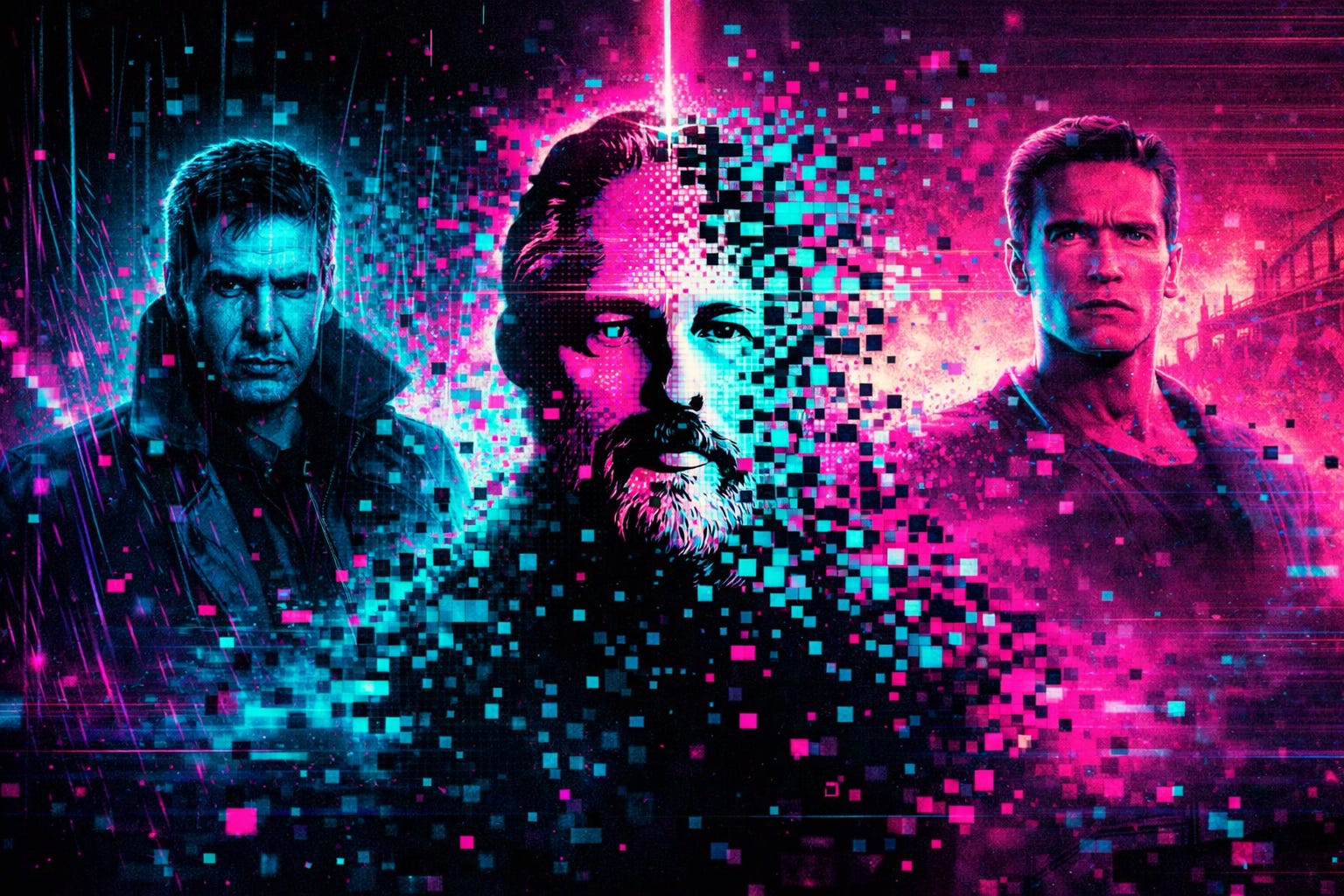
Philip K. Dick did not write sleek futures. He wrote malfunctioning ones.
His prose is jittery, domestic, anti-slick. Appliances hum. Couples argue about rent. Bureaucrats misplace files. The divine intrudes through junk mail and radio static. His characters are rarely heroic; they are exhausted, anxious, chemically altered, financially precarious. Reality does not explode in his novels. It thins. It peels. It glitches.
Dick’s great preoccupation is ontological insecurity. What is real? Who authorizes it? Who profits from declaring it stable? He obsessively stages memory implants, fake police states, counterfeit objects, synthetic animals, precognitive surveillance, false historical timelines. But the hardware is secondary. The core anxiety is epistemic: the world feels edited.
He is unique not because he predicted gadgets but because he made unreliability mundane. His futures are not optimized; they are shabby and metaphysically damp. If other science fiction offers rocket ships, Dick offers epistemic vertigo in a cheap apartment.
Which is why adapting him to film is both irresistible and treacherous.
Hollywood loves high concepts. Dick supplies them generously. Memory implants. Replicants. Precrime. Parallel realities. It is as if he spent his career accidentally pitching studios.
Blade Runner extracts Do Androids Dream of Electric Sheep? and turns theological satire into rain-slicked noir. Total Recall converts ontological doubt into Mars-bound spectacle. Minority Report reframes systemic paranoia as paternal melodrama inside a glass-and-steel surveillance thriller. The Adjustment Bureau converts metaphysical determinism into romantic destiny.
Each film takes a bite of Dick. And each time, something survives, and something is sanitized.
Jean Baudrillard once argued that we now live in simulation rather than representation. Critics have long folded Dick into that hyperreality framework, especially in relation to Blade Runner. The image no longer reflects the real; it replaces it. Dick intuited that long before we had the vocabulary.
Fredric Jameson, writing about late capitalism, positioned Dick as a diagnostician of cognitive disorientation. Under global systems too large to comprehend, reality itself begins to wobble. Dick’s fractured worlds mirror structural incoherence.
Both readings are useful. Both are obvious.
What matters for adaptation is this: cinema is itself a simulation engine. Film does not just depict unstable reality. It manufactures it. To adapt Dick into cinema is to feed simulation into the most powerful image machine available.
That is the adaptation paradox.
Dick’s novels erode reality quietly. Film demands visual coherence. Cinema stabilizes even as it destabilizes. It must show something, frame something, light something. Dick often withholds that stability.
So the adaptations clean him.
Blade Runner trades Mercerism and empathy boxes for atmosphere. Total Recall trades epistemological tightness for body horror spectacle. Minority Report trades ontological dread for moral closure. The result is frequently beautiful, sometimes profound, but almost always more coherent than Dick himself.
Dick wrote flicker. Film prefers neon.
The irony is thick. Dick feared commodified reality. Now his anxieties are monetized in 4K. The Black Iron Prison has international distribution rights. His paranoia has IP lawyers.
And yet he persists.
Because the central condition he diagnosed has intensified. We scroll through algorithmically tailored feeds. We argue about the authenticity of images. Deepfakes circulate. Memory is archived, curated, manipulated. Reality feels editable. Identity feels provisional.
We are living inside a long Dick pic: a curated stream of constructed perception.
Adaptation reveals what in his work is durable. The gadgets date quickly. The dread does not. The fashion shifts. The epistemic anxiety remains evergreen.
Some films preserve more of his instability than others. A Scanner Darkly, with its rotoscoped jitter and drug-soaked banality, feels closest to his temperature. It does not polish the paranoia. It lets it seep. It resists turning Dick into sleek dystopian wallpaper.
Other adaptations convert him into high-gloss futurism. They retain the premise but smooth the metaphysics. Theological panic becomes corporate conspiracy. Gnostic rupture becomes plot twist.
Hollywood prefers conspiracy to cosmology. It can sell paranoia. It struggles with pink beams of divine information.
Dick was never only political. He was metaphysical in a deeply unstable way. His 2-3-74 experiences, his sense that time masked ancient Rome, his belief in hidden intelligence behind appearances—these rarely survive adaptation intact. Film trims the Gnostic weirdness in favor of secular thrill.
And yet the core question keeps resurfacing.
What if reality is contingent? What if the image precedes the thing? What if your memory is an edit?
Every time a studio greenlights another Dick adaptation, it tacitly admits that this question still sells.
The problem of being adaptable is not that Dick translates poorly. It is that he translates too well. His premises slot neatly into cinematic spectacle. His dread scales to skyline proportions. His instability becomes production design.
But beneath the gloss, the flicker remains.
Philip K. Dick was not predicting gadgets. He was diagnosing epistemic collapse. Cinema keeps adapting him because that collapse has become infrastructural.
Call it big Dick energy if you must.
But what his films really circulate is not bravado. It is uncertainty.
And in an era when reality feels crowd-sourced, that uncertainty reads less like fiction and more like a user agreement we clicked without understanding.