
Final Destination is Debt Horror
How modern horror turned survival into compound interest
In the slasher films of the late 1970s and 1980s, the thing trying to kill you usually had a body. It wore a mask. It stalked. It could be outrun, tricked, sometimes even confronted. Knowledge mattered. Revelation mattered. If you learned the rules, named the threat, or refused to play along, survival felt imaginable. Horror assumed that evil, however relentless, could still be faced.
Contemporary horror no longer believes that.
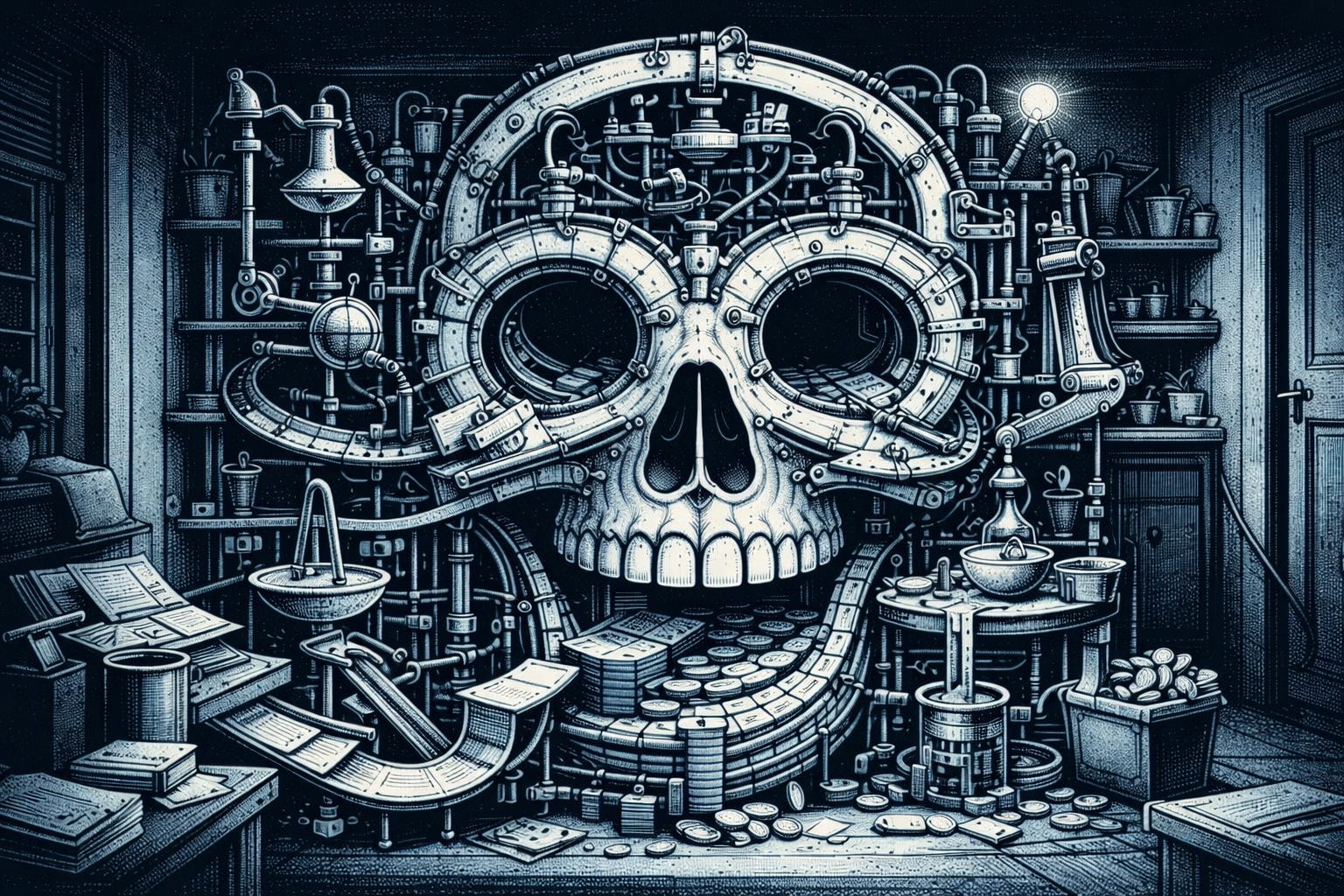
In franchises like Final Destination, Saw, The Purge, and The Cabin in the Woods, the threat does not have a body you can fight. It has procedures. It has logistics. It has a timetable. The monster is no longer a person or even a creature; it is a system that keeps operating whether or not you understand it. Survival doesn’t break the cycle. It activates the next phase.
This is why Final Destination has always felt different from other teen horror franchises. The characters are not punished for wrongdoing. They are not “chosen” in any moral sense. They simply exit a system that was supposed to keep them safe—a plane, a highway, a structure—and that exit marks them. Death does not get angry. It recalculates.
Final Destination is debt horror.
Debt horror is not about dying. It is about liability without agency. You did not design the system. You did not meaningfully consent to its terms. But once you survive long enough to be noticed, you are inside its ledger. What you owe is not guilt or repentance. What you owe is time, vigilance, anxiety, and eventually your body.
This marks the decisive break from 1980s slasher logic. In earlier horror, danger was largely linear. You ran, you fought, you hid, you learned. Each encounter reset the stakes. Revelation offered leverage. In debt horror, danger is exponential. Time does not heal risk. Time multiplies it.
This is where compound interest enters—not as a clever metaphor, but as the engine of the fear. Compound interest is what happens when postponement itself becomes punitive. You do not pay less because you waited. You pay more. The bill does not arrive immediately, but when it does, it is larger, and it affects entire families.
The deaths in Final Destination operate exactly this way. Survival does not reduce danger; it increases it. Each escape makes the next death more elaborate, more delayed, more total. Death behaves less like a killer than like an accountant. Missed payments accrue interest. Delay compounds cost.
This logic has deep folkloric roots. To be spared in folklore is often to be marked. The banished child, the cursed survivor, the guest granted mercy but never release—sparing rarely means freedom. It means visibility. Violence does not stop; it reroutes. Modern system horror strips this logic of gods and kings and leaves only infrastructure behind. There is no authority to plead with in Final Destination. No bargain to strike. No redemption arc. Death is not offended. It is procedural.
This procedural quality is what makes the franchise feel so contemporary. The deaths occur through ordinary environments—kitchens, gyms, highways, office buildings. Objects are not possessed; they are already in motion. The horror is not the accident. It is the inevitability embedded in everyday systems.
This is also why revelation no longer saves anyone. In older horror, learning the truth could give you power. In The Cabin in the Woods, the characters learn exactly how the system works, and it does not help. In Saw, understanding the rules only qualifies you for worse traps. In Final Destination, knowing you are next merely extends the period of anxiety before it happens.
That loss of faith in revelation is what distinguishes modern slasher horror from its predecessors. You cannot stab compound interest. You cannot shoot a ledger. You cannot outwit inherited liability. Once the threat becomes systemic, the monster no longer needs a face.
The newest entry, Final Destination: Bloodlines, makes this shift explicit. The inciting disaster takes place in the 1950s, atop a monumental structure—a fantasy of safety, modernity, and engineering confidence. The original survivor does not escape through prophecy or rebellion. She survives because she is competent. She reads the space. She avoids the crush. She dodges a flame blast while others surge toward the “correct” exit. She is pushed aside by crowd logic rather than rewarded by fate.
The film is careful to show that she does everything right. She is observant. Ethical. Calm under pressure. Her survival is not selfishness or hubris; it is adaptive intelligence inside a failing system.
And yet the horror does not end.
At this point, the franchise is no longer about cheating death out of sequence. It is about generational debt. Survival does not create a problem that can be resolved within one lifetime. It creates a liability that compounds forward.
What matters is not that she eventually dies, but that she lives long enough to generate a future. The descendants are not substitutes for her death. They are the interest produced by her survival. The harm is no longer tied to a body. It is tied to a future that exists when it was not supposed to.
This is where the series risks breaking its own toy—and where it accidentally tells the truth. Debt systems do not end cleanly. They do not map neatly onto individuals. They do not care about fairness or virtue. They outlive the people who incurred them.
Under late capitalism, survival increasingly feels like this. You survive a layoff, but now you are more precarious. You survive illness, but now you are uninsurable. You survive environmental collapse, but now the future bill is catastrophic. Delay does not mean escape. It means interest.
There is no final girl in Final Destination. There is only the next payment.
Wow, great anaylisis of the movie and incite to modern capitalism. It is what happens when capitalism is no longer regulated or controlled but bought and paid for, so any useful mechanisms or laws to protect our citizens that may pass , are struck down by SCOTUS. Interest over 18% should be against the law. Ultra high compounding interest keeps low income people poor and leads to debtor prisons. It is not called that but there are appx 400,000 people a year stuck in jail becasue they cannot pay their bail. States like Texas imposes fines with convictions and if not paid , people end up back in jail ( about 38,000/ year). American family credit card and auto debt is growing quickly and going to break the economy soon.