
The Thoughts That Drift While You’re Looking at a Painting You Don’t Quite Get
The Philosophy of Dead Time #10

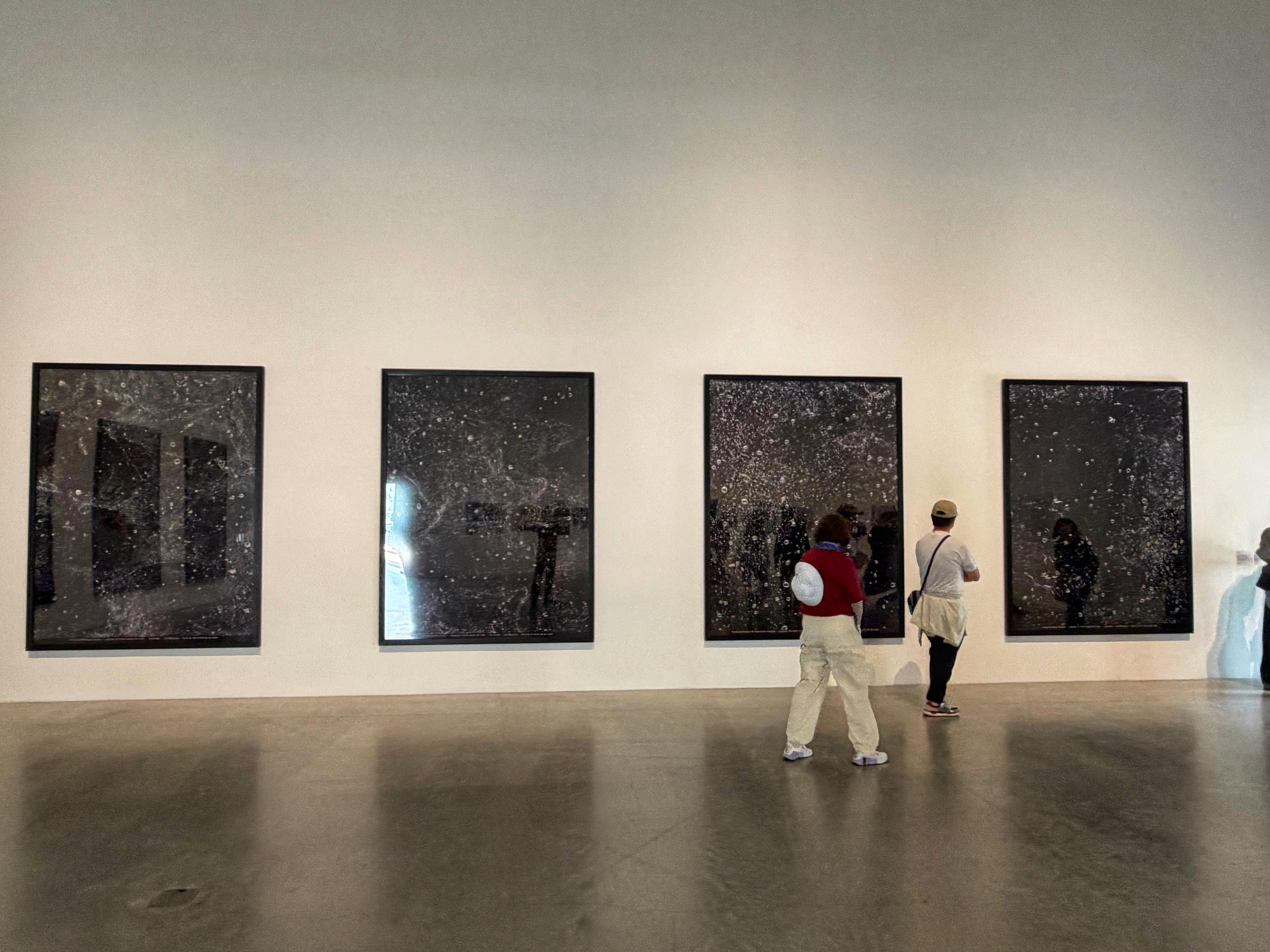
Museums are one of the few public places where standing still and staring at a wall is considered intellectual activity.
You enter the gallery quietly. The air feels cooler than the street outside. The floor echoes faintly under your shoes in a way that makes every step sound like it has cultural significance.
People move slowly here. They speak in museum voices, which are slightly softer than normal voices, as if the paintings might be napping.
And eventually you find yourself standing in front of a painting you don’t quite get.
This happens in every museum.
You stop because the work is large, or colorful, or positioned in a way that suggests it is important. Perhaps the frame is impressive. Perhaps the lighting is dramatic. Something about the presentation implies that you should give this object your attention.
So you do.
And after a moment, your thoughts begin to drift.
At first you assume the problem is temporary.
You look at the painting carefully. You tilt your head slightly, which is a gesture museums have trained us to perform when meaning feels nearby but not quite accessible.
Maybe the painting will explain itself if you give it a minute.
But instead the painting remains calmly mysterious.
Perhaps it’s a field of color. Perhaps it’s shapes that appear to be arguing with each other. Perhaps it’s a scene that feels like it’s almost recognizable but refuses to settle into something you can name.
This is when the museum ritual begins.
You glance at the wall label.
The label is supposed to help. It provides the artist’s name, the year, the materials, and a title that sometimes clarifies everything and sometimes deepens the mystery.
Untitled (Composition #4)
Oil and pigment on canvas
1973
You nod slightly.
This nod is an important part of museum etiquette. It signals to nearby strangers that you are engaged in thoughtful reflection rather than mild confusion.
Your thoughts drift further.
You begin wondering about the moment when the painting became art.
Because at some point, someone painted these shapes. Someone stood in a studio mixing colors and applying them to canvas with serious intention.
Perhaps they were thinking about emotion, or geometry, or the collapse of traditional representation in postwar abstraction.
Or perhaps they were just having a day where the color blue felt necessary.
At some later point, someone else decided the painting mattered.
A curator. A collector. A museum board.
Eventually the painting arrived here, in a carefully lit room where visitors like you drift through and attempt to understand it.
Which leads to the second category of museum thoughts: social choreography.
Museums are full of quiet performances.
You and the other visitors are all pretending to have a relationship with the artwork that may or may not exist.
A man stands nearby with his arms folded. He leans forward slightly, examining the brushstrokes. A couple whispers something to each other and nods solemnly.
You wonder if they understand the painting.
They wonder if you do.
Everyone in the room is gently performing curiosity.
This is not dishonesty, exactly. It’s more like optimism.
Museums operate on the hopeful assumption that if we stand still long enough, something meaningful might happen between us and the object on the wall.
Sometimes that assumption is correct.
But sometimes the thoughts simply continue drifting.
You start noticing smaller details.
The way the paint has texture up close. The faint ridges where a brush pressed into the canvas. The subtle shifts in color that only become visible after a few minutes of looking.
The painting stops being a puzzle and starts becoming an object.
Someone made this.
Someone stood here, or somewhere like here, deciding where the next line would go.
Art museums quietly compress time that way. A person you will never meet left a trace of their attention in the world, and now, decades later, you are standing here lending your attention back.
The two of you never overlap, but the painting becomes the meeting point.
This thought drifts in slowly.
Maybe understanding the painting isn’t the real assignment.
Maybe the assignment is simply looking.
Looking longer than you normally do.
Looking in a world that has trained you to glance.
Museums are one of the few environments where sustained attention is the entire activity.
No notifications. No scrolling. No practical outcome.
Just a person and a rectangle of color sharing a few minutes of quiet.
Eventually you step back.
Another visitor moves forward to take your place in front of the painting.
Your thoughts drift with you into the next room.
A sculpture. A photograph. Another painting waiting patiently for someone else’s confusion.
And somewhere along the way you realize something slightly reassuring about the experience.
Not understanding a painting right away doesn’t mean you failed.
It might simply mean you looked at it honestly.
Which, in a museum full of people nodding thoughtfully at rectangles, may be the most authentic response available.
So you keep walking through the gallery, letting your thoughts drift the way museum thoughts always have—slowly, quietly, and with the faint suspicion that the real artwork might be the attention you brought with you.
Well done.